Ambulatory Care
Outpatient antibiotic prescriptions accounts for the majority of antibiotic use (85-95%) in the United States, up to 30% of which is NOT appropriate or necessary. Reasons why an antibiotic prescription may be inappropriate include: broader spectrum than needed for the diagnosed infection, incorrect dose, duration too long, or prescribed for a condition that is rarely due to a bacterial pathogen (e.g., sinusitis, upper respiratory infection, bronchitis).
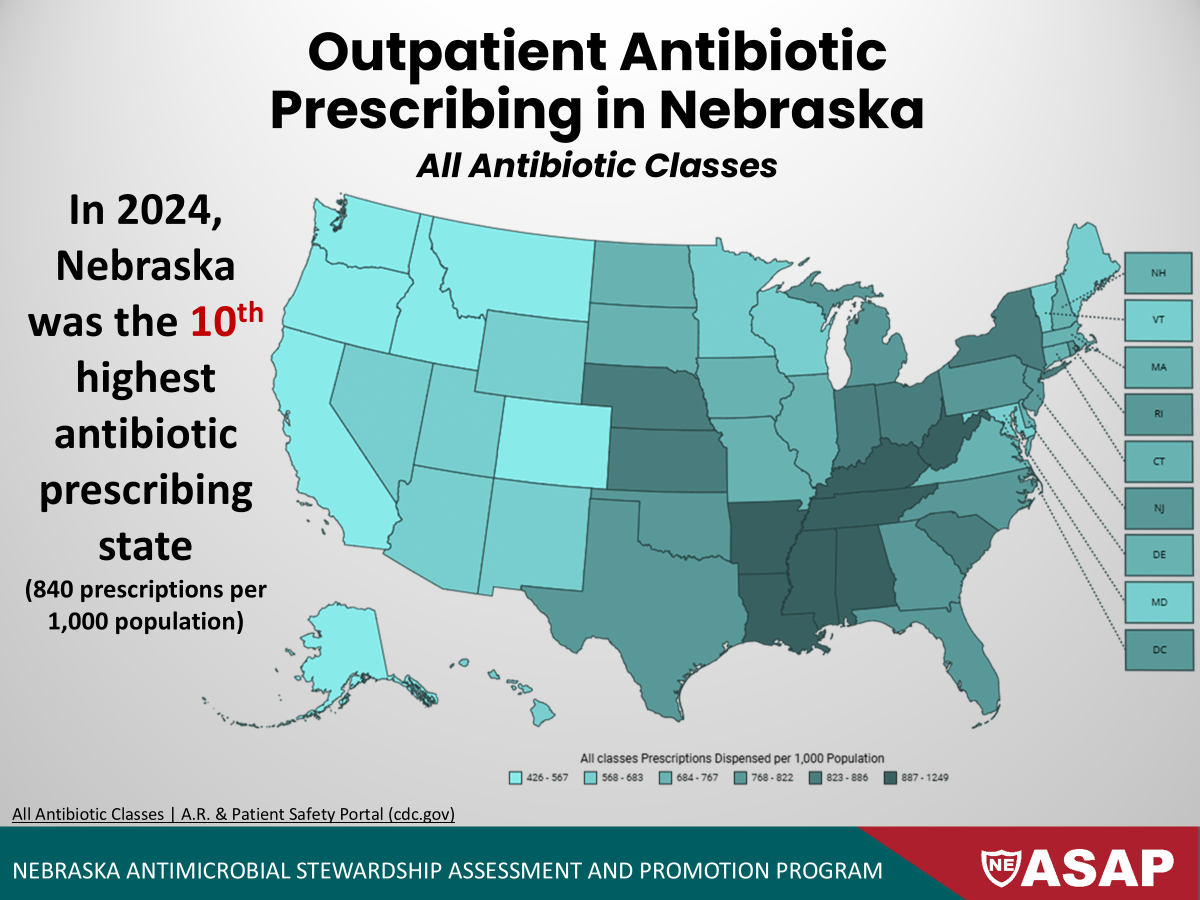
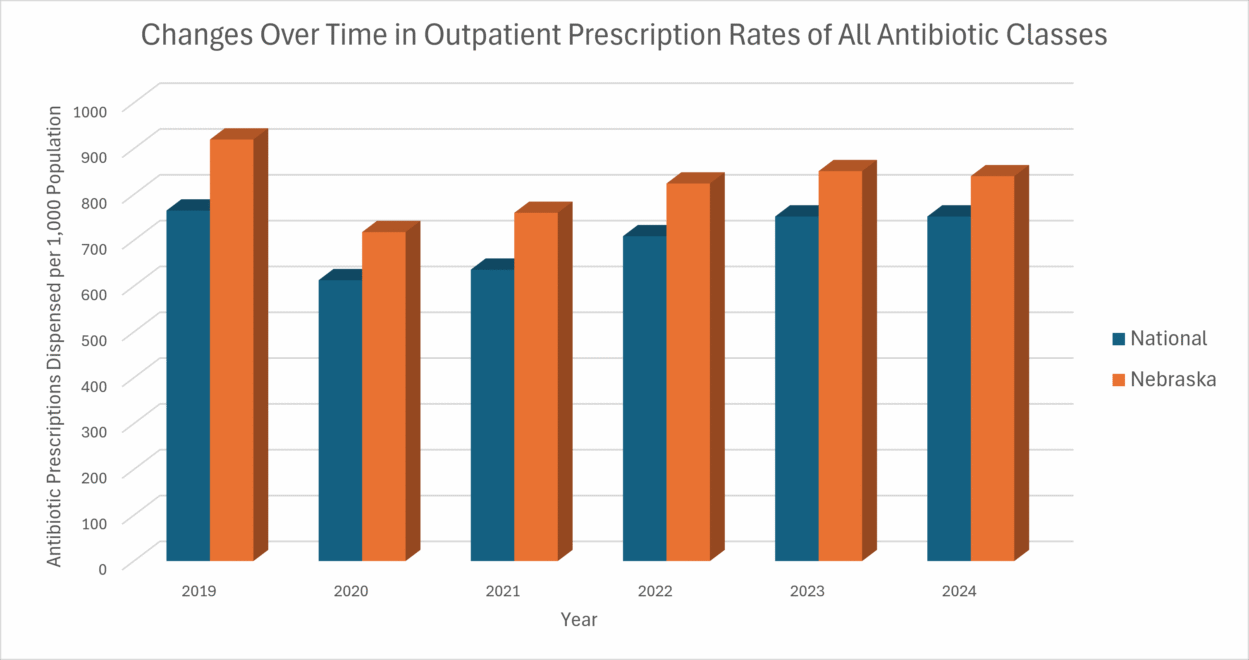
According to data from the CDC, Nebraska has consistently prescribed more antibiotics annually in the outpatient setting compared to the national average between 2019 and 2024. In 2024, Nebraska ranked 10th in outpatient antibiotic prescriptions (840 antibiotic prescriptions per 1,000 population), 12% above the national prescribing rate (752 antibiotic prescriptions per 1,000 population).
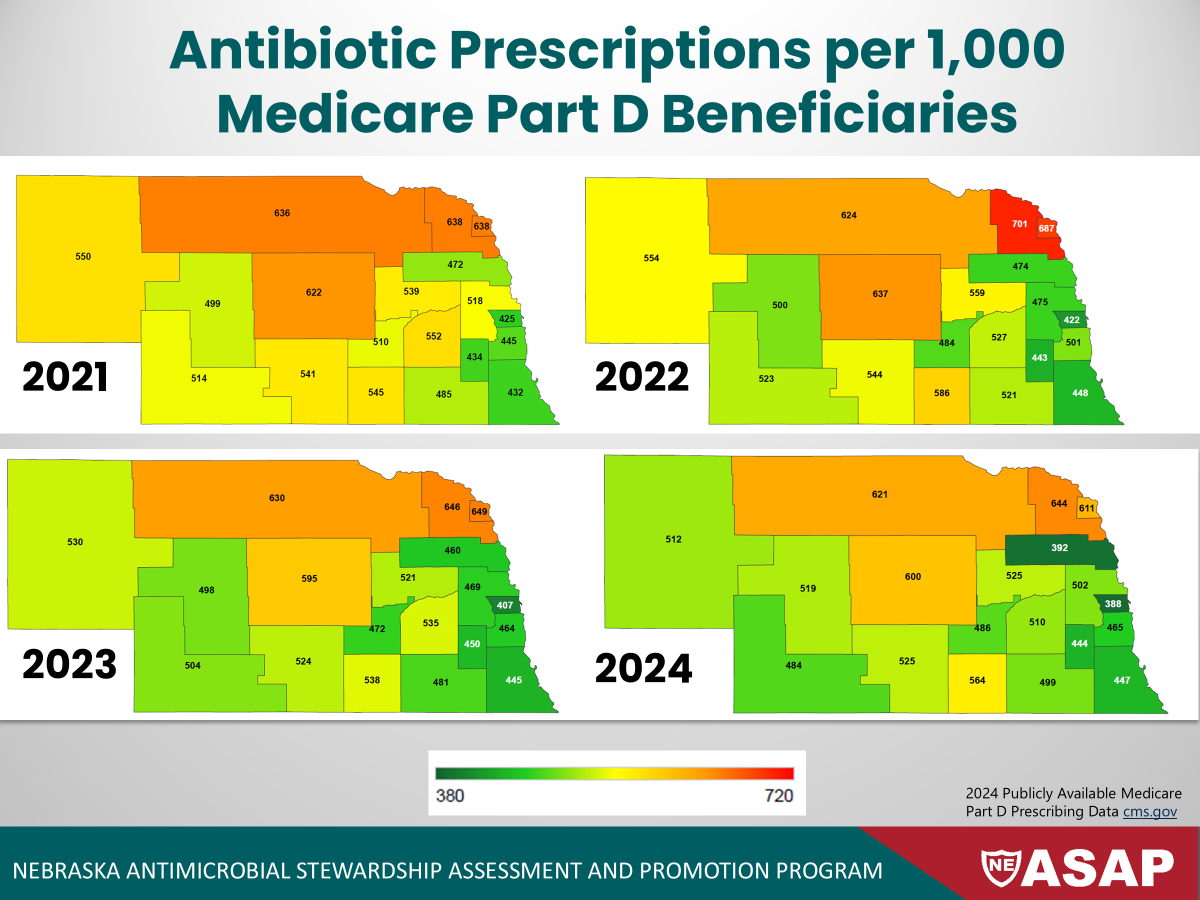
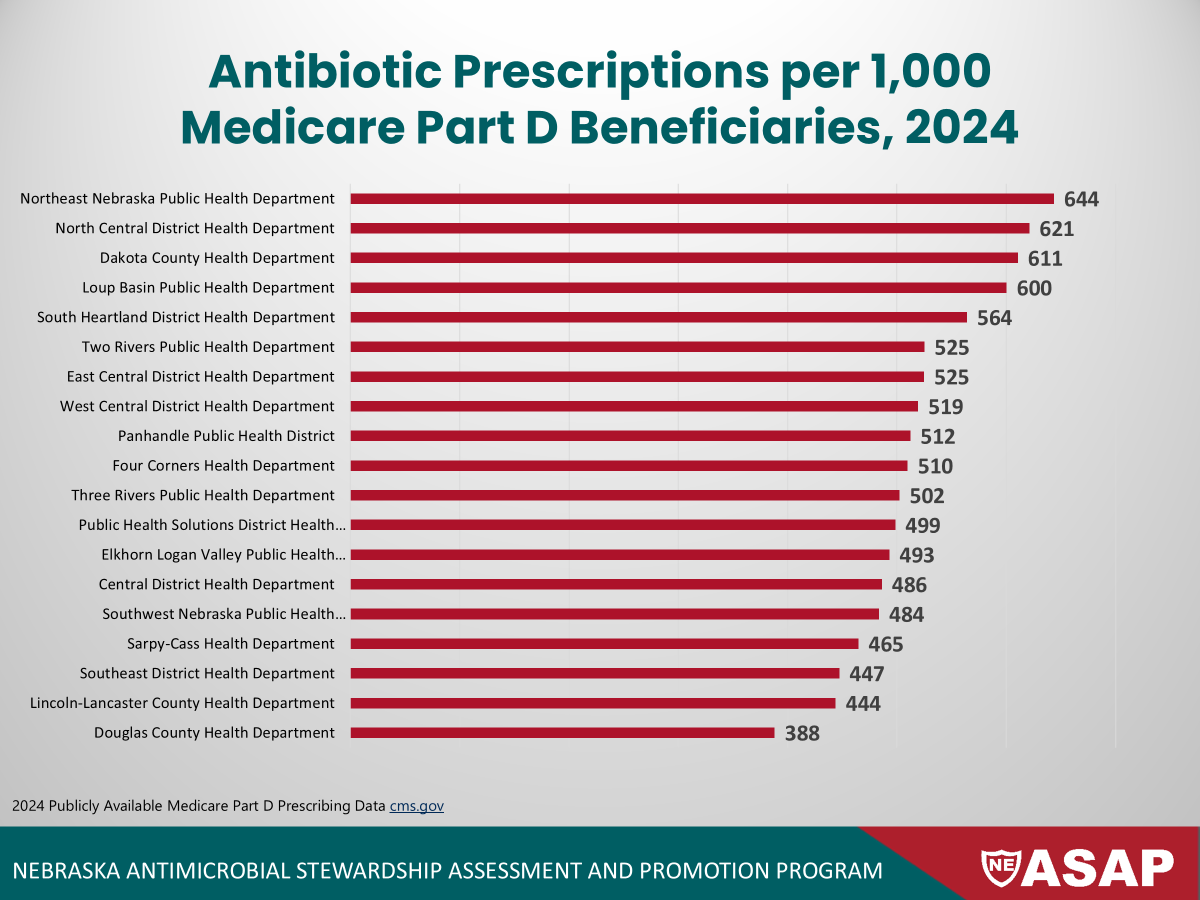
Similar prescribing trends are observed for Medicare Part D Beneficiaries in the state of Nebraska and allow us to take a deeper dive into prescribing trends regionally and by prescriber type. The highest burden of antibiotic prescribing per 1,000 Medicare beneficiaries occurs in the Northeast Nebraska, North Central District, Dakota County, and Loup Basin Public Health Department Districts.
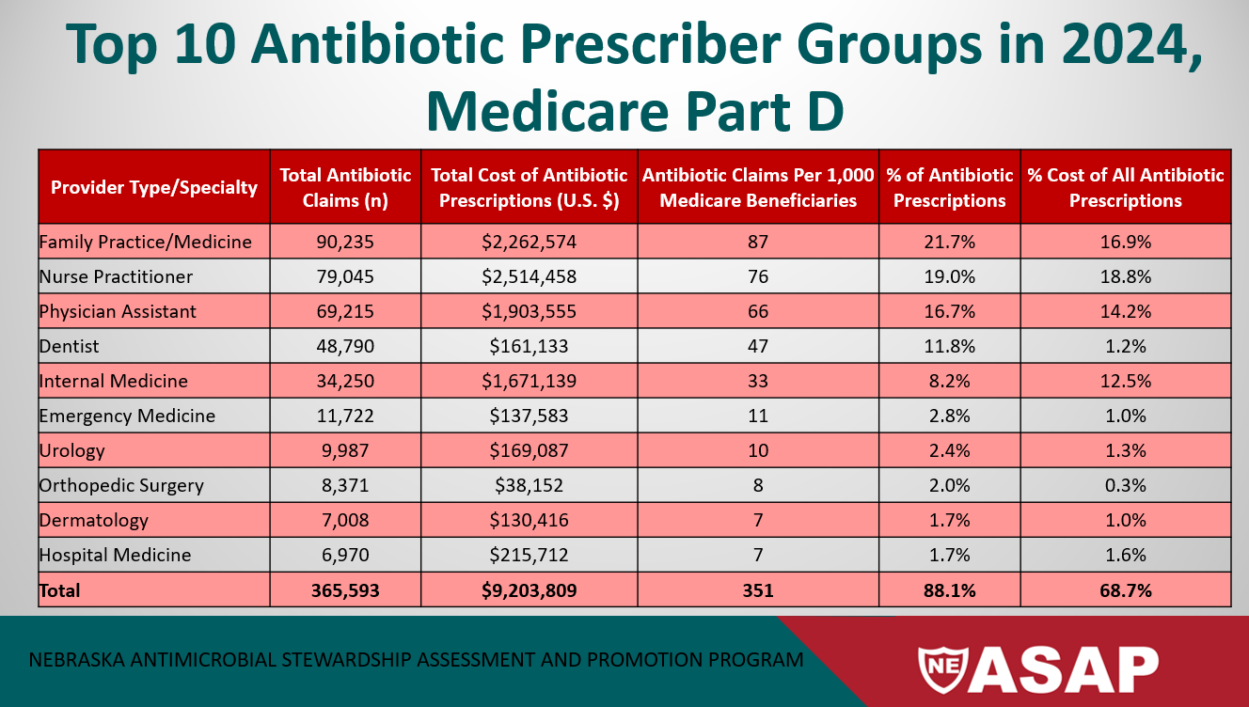
The majority of antibiotic claims generated for Medicare Beneficiaries in the state of Nebraska are prescribed by Family Medicine Practitioners, Advanced Practice Provider’s (i.e., nurse practitioner, physician assistant), and Dentists. These groups account for nearly 70% of all antibiotic prescriptions for Medicare Part D Beneficiaries, totaling $6.8 million in Medicare Part D costs in 2024.
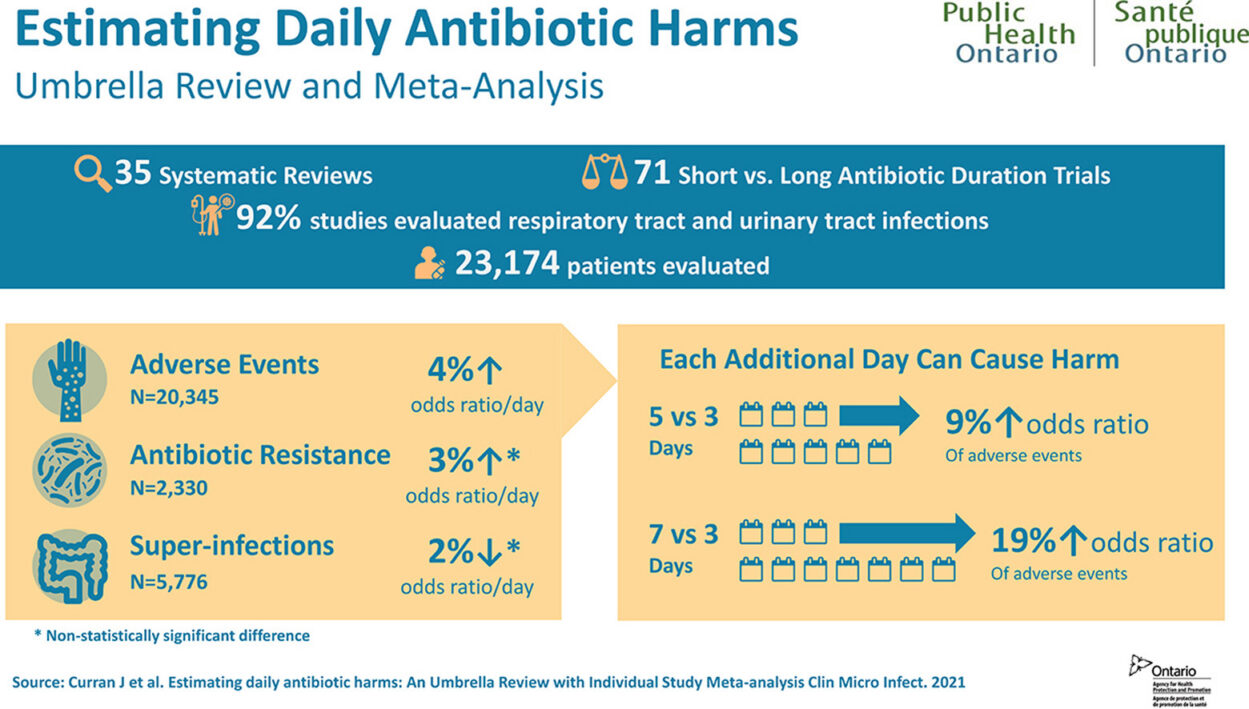
Antibiotic use is not without harm. It is estimated that more than 140,000 emergency department visits annually are associated with adverse events from outpatient antibiotic use, and the daily risk for antibiotic-related adverse events increases by 2-7% per day. These adverse events included more commonly encountered reactions such as rash and diarrhea to ones that are less common but potentially life-threatening such as severe allergic reactions. In addition, antibiotic overuse is associated with antibiotic resistance that can result in higher morbidity and mortality. In the U.S., more than 2.8 million antimicrobial-resistant infections occur each year, resulting in 35,000 deaths. Additionally, Clostridioides difficile infection is a serious complication from antibiotic use resulting in severe inflammation of the colon and diarrhea, and is responsible for 500,000 illnesses and 30,000 deaths annually in the U.S. Because of these reasons and as a matter of patient safety, it is prudent to prescribe antibiotics only when necessary, in all healthcare settings, and especially in the outpatient setting where most of the antibiotic prescribing occurs.
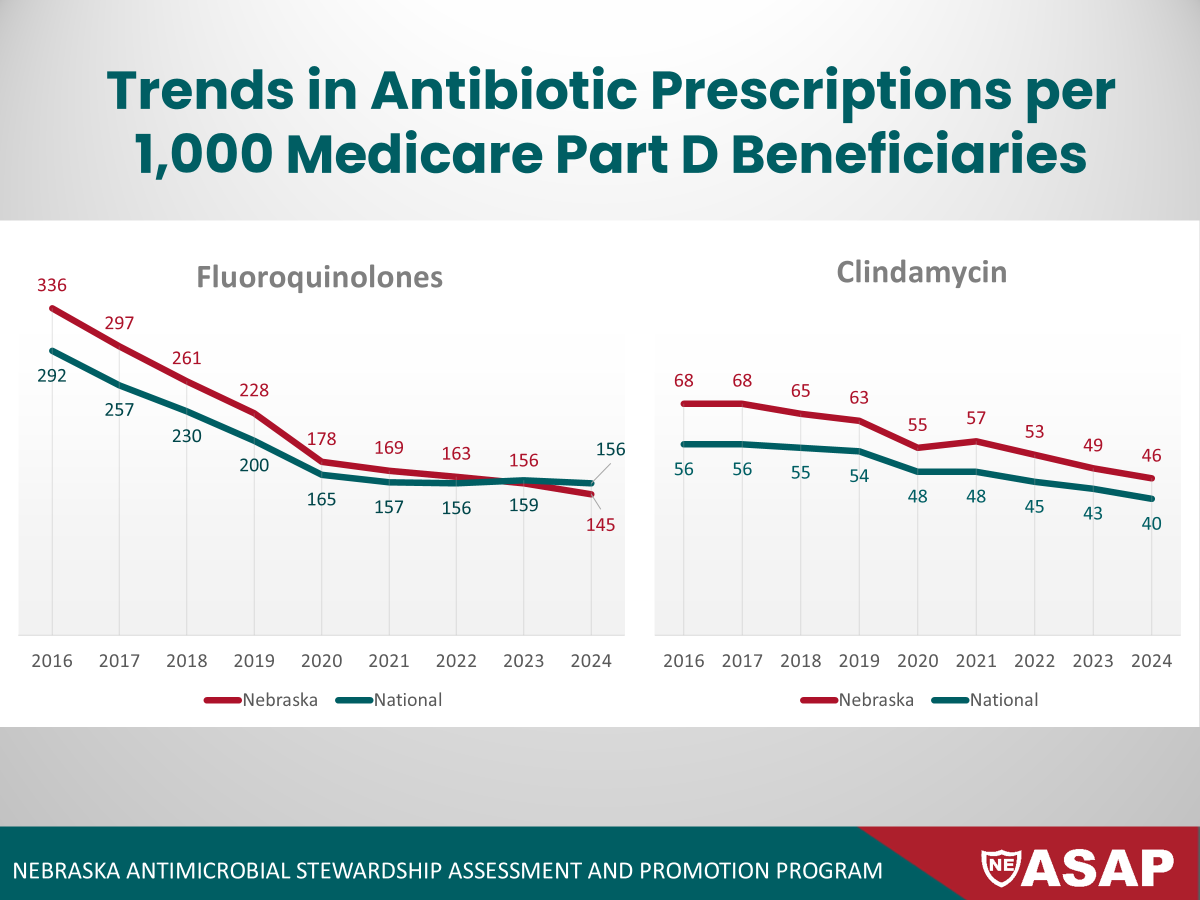
On a brighter note, outpatient antibiotic prescribing in Nebraska has been declining, particularly the use of fluoroquinolones and clindamycin which are associated with frequent side effects, resistance, and C. difficile infection. Even though antibiotic prescribing and use have improved in Nebraska, continued efforts in antibiotic stewardship to further improve in this area is necessary. The prescriber and patient education materials and tools provided in this section will facilitate more appropriate antibiotic prescribing in the outpatient setting. Click on one of the sections to the right to access these materials.